This is the journal of my endeavours to grow a range of fruit, veg and flowers from seed, grow organically, and my attempts to create a personal paradise with 1/2 acre of maintained gardens and 1/2 acre wild meadows. Northern Ireland's average daily high temperatures are 18 °C (64 °F) in July and 6 °C (43 °F) in January. Soil type: Clay
Showing posts with label Irish Cottage. Show all posts

Monday, 4 July 2016

Irish Castle Gardening

Over the weekend I visited Glenveagh Castle located in Glenveagh National Park in County Donegal, Ireland. This is a beautiful area of the Irish countryside and the castle grounds are quite impressive. Just a few photos taken in the rain! Even when raining, its beautiful! 

At one stage this estate was owned by an American from Philadelphia, who purchased it in 1937, and later gave it to the Irish government.
The grounds contain lovely woodland walks, and lots of interesting planting. 

The main plating scheme in the walled garden area contains alternate rows of flowers and vegetables. It makes quite an attractive display.

The gardener's cottage is lovely and is located in the walled garden - so quaint!
More info on this can be viewed by clicking here

Copyright: All words and photos are property of Kelli's Northern Ireland Garden.

Monday, 16 March 2015

The Beauty of Old Ireland on St Paddys

It's St Patrick's week and a great time of the year to remember the beauty of Ireland / Northern Ireland, with its rolling green hills, traditional farming background, and rural  countryside cottages. 

These photos reflect the traditional dwellings and beauty of our landscape. Ireland / Northern Ireland is a great place to visit, with lots to see and do. Highly recommended!

Left: Fisherman's Cottage.
Above: Corradreenan Farm - cottage circa 1802, a simple two-roomed house with a kitchen and a bedroom.
Above: Coshkib Hill Farm - a hill farm circa 1850 from Glenballyemon, one of the nine glens of County Antrim, comprised mostly of moorland and mountain grazing (sheep and cattle) and hay, oats, and potatoes grown.
Above: Ballydugan Linen Weaver's House. This is a replica of a mid-19th century traditional dwelling.
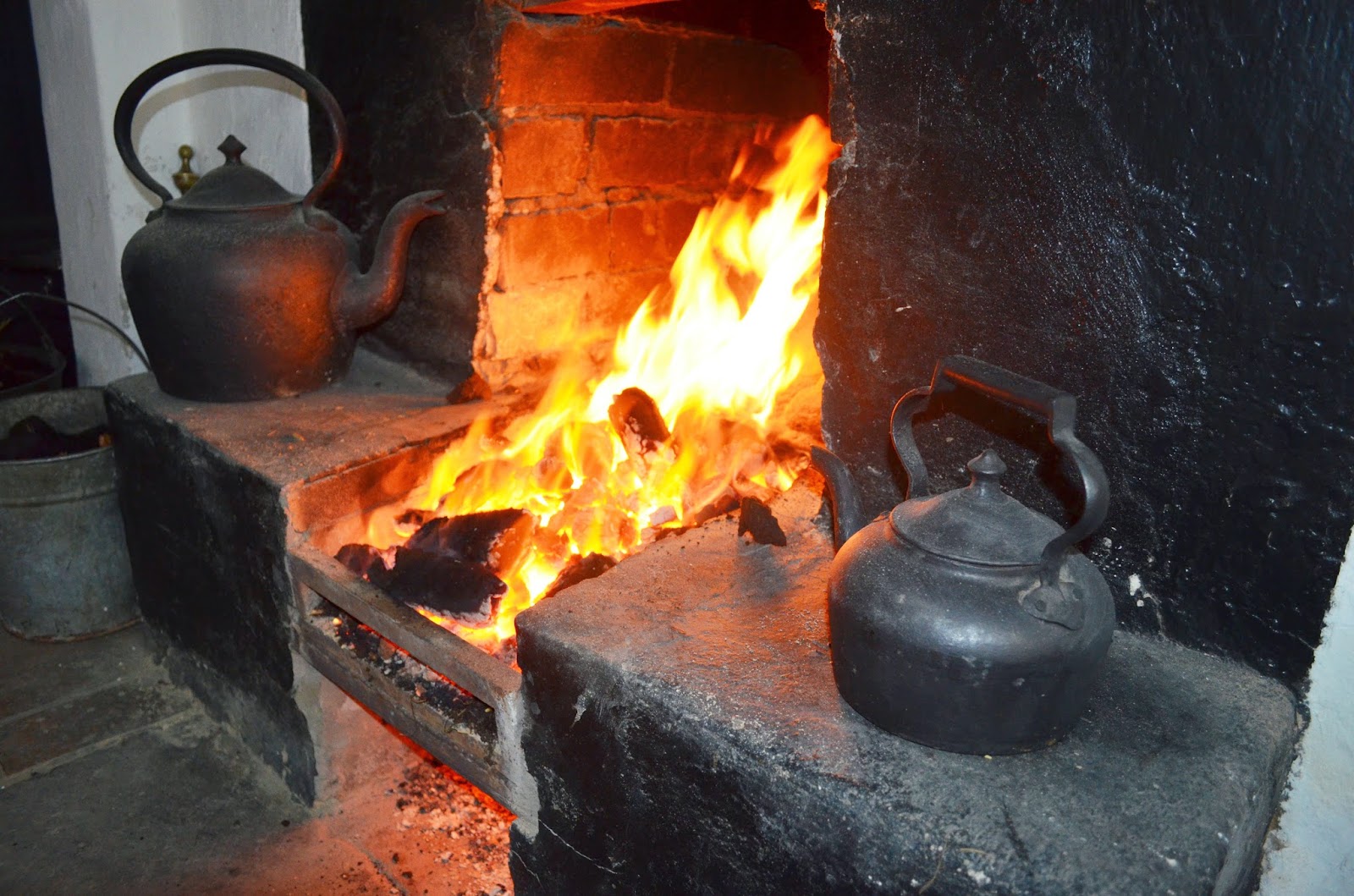
Above and below: Peat fires with its distinctive smell were and still are a common way to stay warm on cold days. The cutting of peat (called 'turf' when cut) for fuel began in the 17th century; more on this can be read by clicking here.

Above: The Old Rectory Cottage - This thatched-roofed house is an example of English rather than Irish building traditions; the skills and techniques to build this style were brought into Ireland by English settlers. Through studies of the roof timbers, the house is thought to have been  built in 1717. Original location: Lismacloskey townland, Toomebridge, County Antrim.
Above and Below: Inside the Old Rectory Cottage it's furnished as the home of an established clergyman, and represents the rural or small-town home of the period 1890-1910.
Above: 1800s McCusker’s Pub - public houses were, and still are, a centre of social life in many Irish towns.
Above: Basket Maker's Workshop - a traditional countryside skill of willow tree basketry.
Above: Sheep and Spring lambs abound in Ireland this time of year. Photo taken on the North Antrim Coast.
Most of the photos of cottages and farms above are part of the historic display at Northern Ireland’s Folk Museum, which was created to preserve the rural way of life and keep it from disappearing all together with increasing urbanisation and industrialisation. The 170 acre Folk Museum and its cottages / dwellings have been collected from various parts of Ireland / Northern Ireland and rebuilt, brick by brick, in the grounds of the museum. If visiting Belfast this is a fantastic museum to spend a day ‘going back in time’ and experiencing life from around 100 years ago. 

Copyright: All words and photos are property of Kelli's Northern Ireland Garden.

Friday, 2 May 2014

New Cottage Style Plants for the Garden

The weather has been sunny, dry and warm (apart from some chilly evenings) and the garden centres have been packed out! I had some compost to get and of course I ended up buying some new plants (varieties pictured).


I've been wanting to add some new cottage-style plants to the garden so I bought a few small plants (which I think are all perennial) to add the the borders. I seem to have gone for mostly blue/ purple/ pinks and a random splash of yellow with the Achillea; they were 5 for £10 ($17 US dollars). These have all been  planted into a border and growing well. Its great to see all the growth this time of year! The slugs and snails are active too, and I've noticed lots of green aphids - so I'm patrolling my plants regularly. 


I've also manged to get some seed sown. I've sowed quite a variety of salad seed, carrot, chard and others direct into the ground and some seed sown in a greenhouse (peppers, tomato, etc). It seems the perfect weather for seed germination! Lots to do this time of year! Enjoy your weekend in the garden!

Copyright: All words and photos are property of Kelli's Northern Ireland Garden.

Sunday, 16 March 2014

Some Things Irish on St Paddys

St Patrick's weekend is generally the time I plant potatoes, however, I'm a bit behind this year so perhaps I'll wait until Good Friday.


Looking over my photos I thought St Paddy's would be a good time to show a few photos of the traditional side of the island of Ireland - some of the scenery and one of the reason why tourism exists!


Left: signage in Ireland is often photographed. When my brother visited from the USA he loved taking photos of the different signs, symbols and words used in Ireland and Northern Ireland to describe things.
Above and Below: Thatched roofed cottages. Traditional cottages aren't as common as they were 20 years ago, however, they do still exist. The ones pictured are now part of a museum in County Kerry.
Sheep, however, are very common in Ireland (North and South) - the Spring lambs are a lovely sight each year!
Above: A 'motte' located beside what was Antrim Castle, dating around the 1600s, however the castle was destroyed by fire in 1922. The motte is now a viewing mount with corkscrew path leading to the top.
Above: Photo taken in County Kerry.
Below: 
Photo taken in County Antrim.
Both coastal drives provide fantastic scenery!


Copyright: All words and photos are property of Kelli's Northern Ireland Garden.

Sunday, 17 March 2013

All Things Irish on St Paddy's

It's St Patrick's Day and I thought I'd share some of the local countryside. I particularly like cottages and the more traditional Ireland rather than the new, modern buildings that seem to pop up everywhere. Here's a little taste of the Irish countryside...

Left: A cottage in County Down.
Above and Below: A traditional village shop at the Kerry Bog Village. More photos of traditional cottages can be found at a previous St Paddy's post - here.  

Above: Andrew Jackson's cottage located near Carrickfergus in County Antrim - it may look plain but it was built in the 1750's - see below.
Inside Andrew Jackson's cottage (now a museum) are traditional wares that keep it looking like it did all those years ago.
Above and Below: Across the road from Andrew Jackson's cottage is another thatched roof cottage. The blue sign indicates that it's rich in history and was the home of Ruddick Millar (more info below).

Above And Below: Traditional Irish dancing costumes worn by girls competing in dance tournaments.

And my favourite - sheep dotted across our countryside. Farmers are kept busy this time of year as it's lambing season.
Happy St Patrick's Day!

Copyright: All words and photos are property of Kelli's Northern Ireland Garden.

Thursday, 17 March 2011

Happy St Patrick's day

Happy St Patrick's Day! It's a beautiful day today in N. Ireland.

To celebrate St Paddy's I'm showcasing some Irish cottages and gardens... (click on photos to enlarge)
Above: Irish bog pony photo taken in County Kerry.
Cottage photos taken in County Kerry.
Herbaceous flower border photos taken in County Antrim.

Lastly, what would St Paddy's be without some traditional Irish bread so I made traditional wheaten bread this morning ...
The flour mix contains white flour and a course wheaten flour (picutred).
 Later today the Irish stew will be cooking.
Have a great day!